
Business, Reimagined: How Value, Trust, and Systems Create Sustainable Growth

What “Business” Really Means
At its simplest, a business is an organized effort to create and deliver value in exchange for revenue. But the word “value” carries more weight than a product description or a service menu. Value includes outcomes customers care about (saving time, reducing risk, increasing status, improving health), the experience of receiving that outcome, and the confidence that it will be delivered consistently.
Business is also a system: it coordinates people, capital, information, and operations to meet demand. Whether a local bakery, a software startup, or a multinational manufacturer, every business faces the same foundational challenge—turning resources into results efficiently, ethically, and repeatedly.
Core Building Blocks of a Business
1) A Clear Value Proposition
A value proposition explains why a customer should choose you over alternatives. Strong propositions are specific: they identify a target customer, a problem or desire, and a distinct benefit. The best value propositions reduce uncertainty by making the promise measurable—faster delivery times, fewer defects, better support, clearer pricing, or superior reliability.
2) A Sustainable Business Model
A business model describes how value becomes revenue and profit. It includes pricing, cost structure, distribution, and the resources needed to deliver. Sustainable models withstand competitive pressure and changing market conditions by balancing customer benefit with internal economics.
- Revenue streams: subscriptions, one-time purchases, usage-based pricing, licensing, ads, commissions.
- Cost drivers: labor, materials, marketing, infrastructure, compliance, logistics.
- Margin structure: gross margin and operating margin determine how much room you have to invest and survive shocks.
3) Operations That Scale
Operations is where strategy becomes real. It covers how work flows from input to output: sourcing, production, service delivery, quality control, inventory, and customer support. As a business grows, informal “heroic effort” must evolve into repeatable processes. Scaling is less about doing more and more about designing systems that maintain quality while volume increases.
4) Marketing and Sales: Creating Demand and Converting It
Marketing identifies and attracts the right customers; sales converts interest into commitment. Modern marketing is increasingly data-informed, but the fundamentals remain: understand your audience, communicate benefits clearly, and build trust over time. Sales success depends on qualification (speaking to customers who can truly benefit), addressing objections honestly, and mapping your offering to the customer’s decision criteria.
5) Finance and Risk Management
Profit is not the same as cash. Many businesses fail not because the idea is bad, but because cash flow collapses under growth, delayed payments, or unexpected expenses. Financial discipline means tracking unit economics, managing working capital, maintaining reserves, and assessing risk—from supplier concentration to regulatory exposure and cybersecurity.
Strategy: Choosing Where to Play and How to Win
Strategy is the set of choices that focus your resources. Without it, businesses drift into reactive decision-making and scattered offerings. Good strategy answers two questions:
- Where to play: which customers, which geographies, which channels, which categories.
- How to win: cost advantage, differentiation, speed, brand, network effects, superior service, or specialized expertise.
Importantly, strategy also includes what you will not do. Declining distractions preserves attention and capital for the opportunities that matter.
People: The Human Engine of Performance
Even with automation and AI, business outcomes still depend on people—how they decide, collaborate, and execute. Hiring is not only about skills; it is about reliability, communication, and alignment with the company’s standards. Culture is often described as “how things are done,” but in practice it shows up in everyday behaviors: how feedback is given, how failures are handled, and whether commitments are kept.
High-performing organizations tend to share a few traits: clear goals, roles that make ownership visible, feedback loops that drive learning, and leaders who create psychological safety without lowering accountability.
Innovation and Adaptation in a Changing Market
Markets change due to technology, regulation, competition, and shifting customer expectations. Businesses that endure treat innovation as a continuous capability rather than a one-time breakthrough. Innovation can be product-based (new features), process-based (faster fulfillment), or business-model-based (subscriptions replacing one-time sales).
Digital transformation is no longer optional for many industries. Data, automation, and cloud tools can reduce costs and improve service, but only if implementation is tied to real business goals. Technology should support a better customer experience and stronger operations, not add complexity for its own sake.
Ethics and Trust as Competitive Advantages
Trust is an asset that compounds. Customers reward businesses that are transparent about pricing, deliver what they promise, and handle issues fairly. Employees stay where they feel respected and where leadership is consistent. Partners collaborate more readily when terms are clear and performance is dependable.
Ethics is not just compliance; it includes how data is handled, how marketing claims are made, how suppliers are treated, and how environmental and social impacts are managed. In many sectors, responsible practices reduce risk and strengthen brand resilience over time.
Metrics That Matter: Measuring What You Want to Improve
What gets measured gets managed—if the metric reflects reality. Effective measurement uses a small set of indicators tied to customer value and financial outcomes. Examples include customer retention, on-time delivery, defect rates, customer acquisition cost, lifetime value, and cash conversion cycle.
- Leading indicators: pipeline quality, website conversion rate, support response time.
- Lagging indicators: revenue, profit, churn, market share.
The best businesses connect these metrics so teams understand cause and effect—how operational improvements influence customer satisfaction and how that drives growth.
Building a Business That Lasts
Business success is rarely a single dramatic moment; it is the result of consistent decisions made well over time. A lasting business focuses on real customer outcomes, protects its economics, invests in operational clarity, and treats people—customers and employees—as long-term relationships rather than transactions.
When value is clear, systems are strong, and trust is earned, growth becomes less fragile. In that sense, business is not merely commerce—it is the disciplined practice of turning a good promise into a reliable reality.
Listings Related to the Article: Business, Reimagined: How Value, Trust, and Systems Create Sustainable Growth
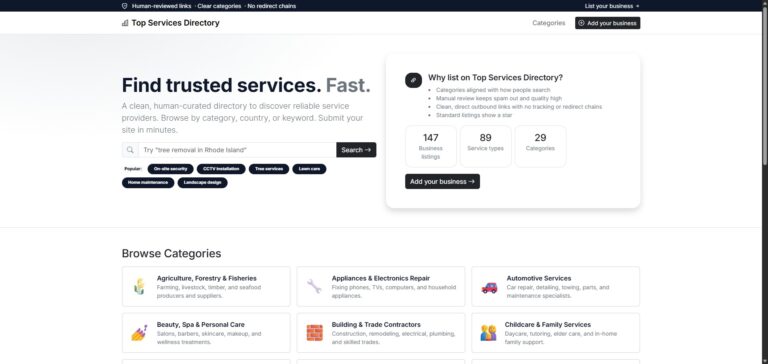
Top Services Directory
Top Services Directory is the home of trusted services. Each listing includes clear details, accurate categories, and location info, with an optional verification badge after a quick check to signal credibility. Customers find dependable providers faster, and businesses build trust and expand their reach.
- Category
- Reference » Directories
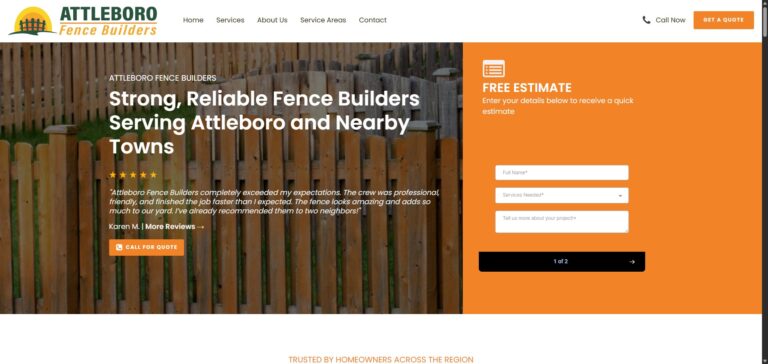
Attleboro Fence Builders
Attleboro Fence Builders delivers durable, high-quality fences designed to enhance privacy, security, and curb appeal. Their dependable service is customized to meet the unique needs of every customer.

California Restroom Trailer Rentals
California Restrooms is one of California’s largest and most trusted sanitation providers, specializing in luxury restroom trailers, shower trailers, porta potty rentals, and mobile laundromat trailers. With more than 25 years of experience, the company is uniquely positioned to deliver state-of-the-art restroom and shower rentals at competitive rates, paired with exceptional customer service for every occasion.
More Articles Like: Business, Reimagined: How Value, Trust, and Systems Create Sustainable Growth

Business Services Explained: The Engine Behind Modern Company Growth
Business services help organizations operate more efficiently, scale faster, and focus on their core strengths. From consulting and IT support to logistics and marketing, these services play a central role in modern business success.

How Health Organizations Shape Stronger Communities
Health organizations play a central role in protecting public well-being, expanding access to care, and responding to local and global health challenges. From hospitals to nonprofits and international agencies, these institutions help build healthier, more resilient communities.

Recreation: Why Leisure Matters for a Healthier, Happier Life
Recreation is more than spare-time fun; it supports physical health, mental balance, social connection, and personal growth. From outdoor adventures to creative hobbies, meaningful recreation helps people recharge and live more fully.